Company Core Values Word Concepts Banner: A Visual Tool for Workplace Trust and Culture
Understanding the Company Core Values Word Concepts Banner
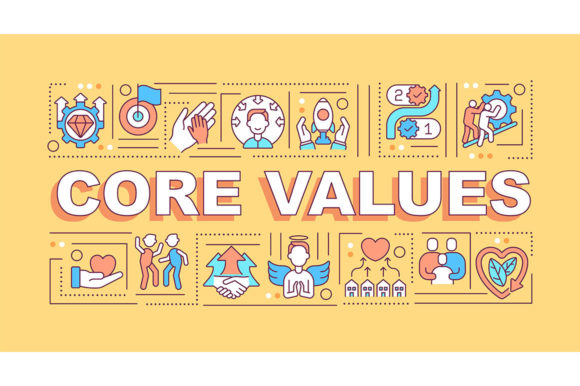
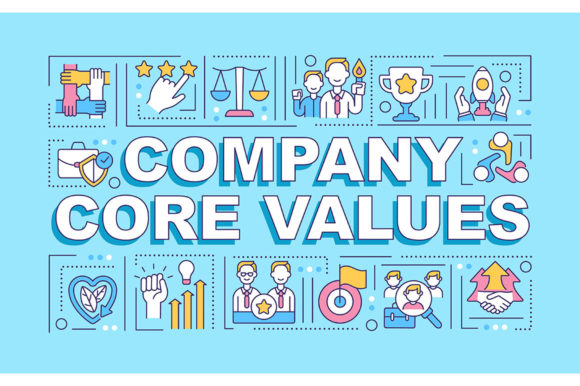
The Company Core Values Word Concepts Banner is a design-focused visual asset used to communicate an organization's foundational principles. It typically features a curated list of value-driven words—such as integrity, collaboration, innovation, and accountability—presented in a clean, visually appealing format. Often used in office spaces, websites, or internal communications, this banner helps reinforce company culture and align employee behavior with organizational goals.
This type of banner usually comes as part of a downloadable package containing multiple file formats such as EPS, JPG, PNG, SVG, and AI. These formats allow for flexibility in both print and digital applications. The design often includes linear icons, isolated typography, and a turquoise background, creating a modern and professional aesthetic that supports a cohesive brand identity.
Why This Banner Matters for Workplace Culture
Establishing and maintaining a strong workplace culture is essential for employee engagement, retention, and overall organizational success. The Company Core Values Word Concepts Banner serves as a visual reminder of what the company stands for, making abstract values tangible and accessible to all team members. It supports efforts to build trust, encourage accountability, and foster a shared sense of purpose among employees.
For HR departments, internal communications teams, or business leaders, this banner is a practical tool that bridges the gap between mission statements and daily workplace behavior. It can be especially useful during onboarding, team meetings, or internal campaigns focused on cultural reinforcement.
Key Benefits of Using the Banner
- Visual Clarity: Presents complex values in an easy-to-understand visual format.
- Brand Consistency: Reinforces company identity through consistent design elements and color schemes.
- Accessibility: Can be displayed in common areas, digital dashboards, or employee portals for constant visibility.
- Customization: Multiple file formats allow for easy adaptation to various platforms and print materials.
- Cultural Alignment: Encourages employees to internalize and act on company values through daily visibility.
Considerations and Potential Tradeoffs
While the Company Core Values Word Concepts Banner offers several advantages, it’s important to approach its use with realistic expectations. Simply displaying a banner will not automatically instill company values or improve workplace culture. Its effectiveness depends on how well it is integrated into broader organizational strategies and supported by leadership actions.
One potential limitation is over-reliance on visual tools without corresponding behavioral or policy changes. If not paired with training, feedback mechanisms, or performance incentives, the banner may become a decorative element rather than a meaningful cultural tool.
Additionally, organizations with rapidly evolving values may find that static banners become outdated quickly. In such cases, more dynamic or interactive formats may be a better fit.
When the Banner is a Strong Fit
The Company Core Values Word Concepts Banner is particularly effective in the following scenarios:
- New Company Launch: Helps establish a clear cultural foundation from the outset.
- Office Redesign or Relocation: Offers a simple yet impactful way to integrate brand values into physical spaces.
- Employee Onboarding: Serves as a visual aid during orientation sessions to introduce new hires to company culture.
- Internal Campaigns: Supports initiatives focused on ethics, teamwork, or innovation by keeping values top of mind.
- Remote Work Environments: Digital versions can be shared across internal platforms to maintain cultural cohesion among distributed teams.
When Alternatives May Be Worth Considering
While the banner is a valuable tool, there are situations where alternative approaches may offer better results:
- Dynamic Value Systems: If your company’s values evolve frequently, consider interactive digital dashboards or rotating visual content.
- Highly Technical Teams: For teams that respond better to data and metrics, values may be more effectively communicated through performance dashboards or KPIs tied to cultural goals.
- Low Engagement Levels: In environments where employees are disengaged or skeptical of company messaging, a standalone banner may not be sufficient. Pair it with leadership workshops or employee feedback loops for greater impact.
- Global Teams: If your organization spans multiple languages or regions, consider localized versions or additional translation support to ensure clarity and relevance.
How to Decide If This Banner Aligns With Your Needs
Before adopting the Company Core Values Word Concepts Banner, consider the following questions to assess its suitability:
- Are your company values clearly defined and unlikely to change in the near future?
- Do you have existing internal communication channels where the banner can be displayed consistently?
- Is there leadership buy-in to support the values represented in the banner through actions and policies?
- Are your employees likely to respond positively to visual communication tools?
- Do you have the technical capacity to implement the banner across both print and digital formats?
If most of your answers are “yes,” then this banner can be a valuable addition to your internal communication toolkit. If not, consider supplementing or replacing it with complementary tools that better match your organizational context.
Final Thoughts
The Company Core Values Word Concepts Banner is more than just a design asset—it’s a strategic tool for reinforcing company culture and building trust in the workplace. When used thoughtfully and in alignment with broader organizational efforts, it can help create a more cohesive, motivated, and values-driven team.
However, like any communication tool, its success depends on how it’s implemented. By understanding its benefits, limitations, and ideal use cases, you can make an informed decision about whether it fits your organization’s current needs and long-term goals.